Jr. Ucayali 391, Lima, Perú
204-2658
[email protected]
Archive
María Trinidad Enríquez: An intellectual emancipator in Republican Peru
María Trinidad Enríquez: An intellectual emancipator in Republican Peru
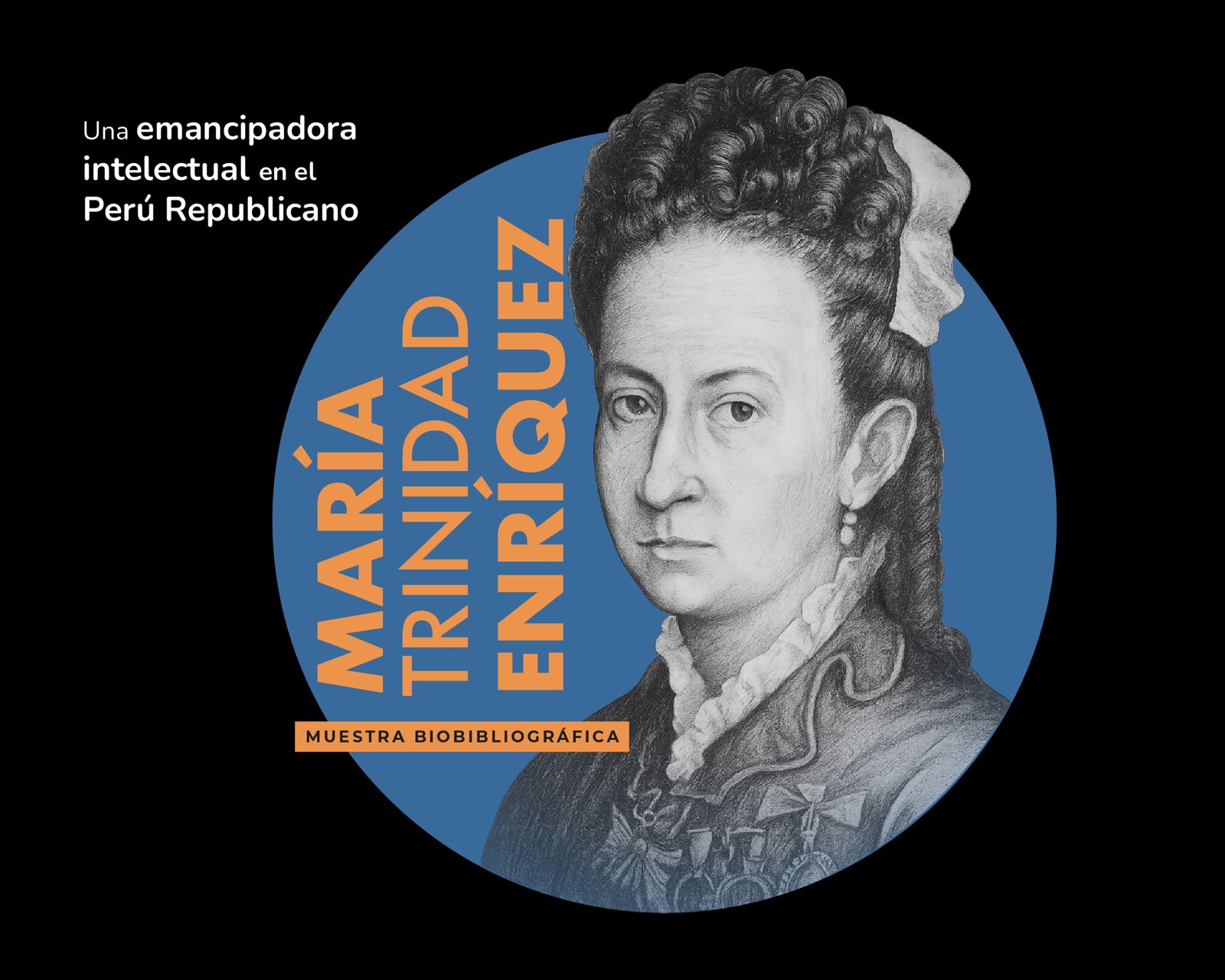
María Trinidad Enríquez-Ladrón de Guevara (1846–1891) is a founding figure in the history of women’s university education in Peru and Latin America. Her career is significant not only because she was the first woman on the American continent to access higher education, but also because she marked a turning point in the history of education and civil rights in the country.
The exhibition brings together documents, images and testimonies about her life and, in turn, seeks to restore María Trinidad Enríquez’s central role in the republican canon with the aim of projecting her legacy to generations of women who, thanks to her struggle, found a legitimate place in university, law and Peruvian public thought.
The curatorship, led by Karen Bernedo, highlights the life of a woman of great social sensitivity who challenged the customs of her time and combined her academic work with intense cultural and journalistic activity.
CONVERSATORIUM:
As part of the bio-bibliographical exhibition “María Trinidad Enríquez: An Intellectual Emancipator in Republican Peru,” the Inca Garcilaso Cultural Centre of the Ministry of Foreign Affairs will hold a conversatorium featuring distinguished academics Karen Bernedo, Francesca Denegri, María Emma Mannarelli, and Roxana Quispe-Collantes.
Karen Bernedo is a communicator and social documentary filmmaker with a Master’s degree in visual anthropology and a Postgraduate Diploma in Gender Studies from the Pontifical Catholic University of Peru (Pontificia Universidad Católica -PUCP). She has directed the documentaries Las Otras Memorias (The Other Memories) and Arte y Violencia Política (Art and Political Violence). She is a lecturer at the Universidad Científica del Sur and a consultant for human rights and women’s rights organisations. She is also co-founder of the Asociación Cultural Museo Itinerante Arte por la Memoria (Cultural Association Travelling Museum Art for Memory).
Francesca Denegri holds a PhD in Hispanic Literature from King’s College London. She taught Spanish American language and literature at University College London. She is a senior lecturer in the Department of Humanities at PUCP. She has published El abanico y la cigarrera. La primera generación de ilustradas en el Perú (The Fan and the Cigarette Case: The First Generation of Educated Women in Peru) (2004) and Ni amar ni odiar con firmeza. Cultura y emociones en el Perú posbélico (Neither Loving nor Hating with Conviction: Culture and Emotions in Post-War Peru) (2019), as well as various articles in specialist journals.
María Emma Mannarelli holds a degree in History from PUCP. She obtained her Master’s degree in Philosophy and Arts from Columbia University in New York, USA, and graduated with a PhD in History from the same institution. She currently teaches on the Master’s programmes in Gender Studies and Anthropology at PUCP and on the Master’s programme in History at the Universidad Nacional Mayor de San Marcos (National University of San Marcos).
Roxana Quispe-Collantes is a Peruvian anthropologist, writer, researcher, and teacher. She obtained her PhD in Peruvian and Latin American Literature from the Universidad Nacional Mayor de San Marcos (National University of San Marcos) with a thesis written and defended in Southern Quechua. She speaks and writes in Quechua and English, and conducts research in literature, linguistics, intercultural bilingual education, anthropology, art, and expressions of diversity and the legacy of Quechua culture.
Share

Cultural Center activities
Free entry
Folow us




SEGIB’s support is appreciated
Copyright © 2020 Centro Cultural Inca Garcilaso. All rights reserved | Legal notice | Privacy policy | Cookies policy