Jr. Ucayali 391, Lima, Perú
204-2658
[email protected]
What progress left us
Ximena Alarcón
Ximena Alarcón
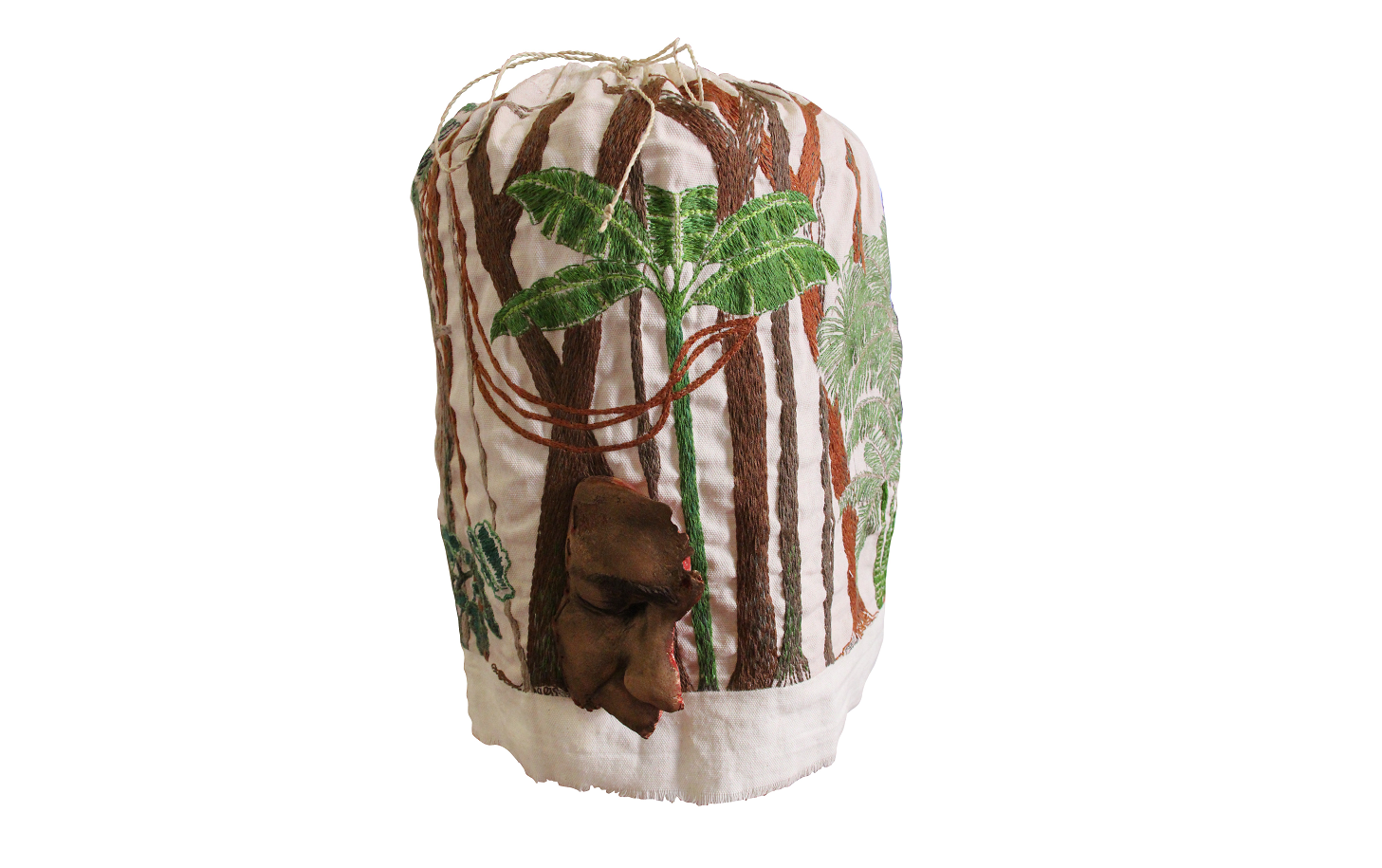
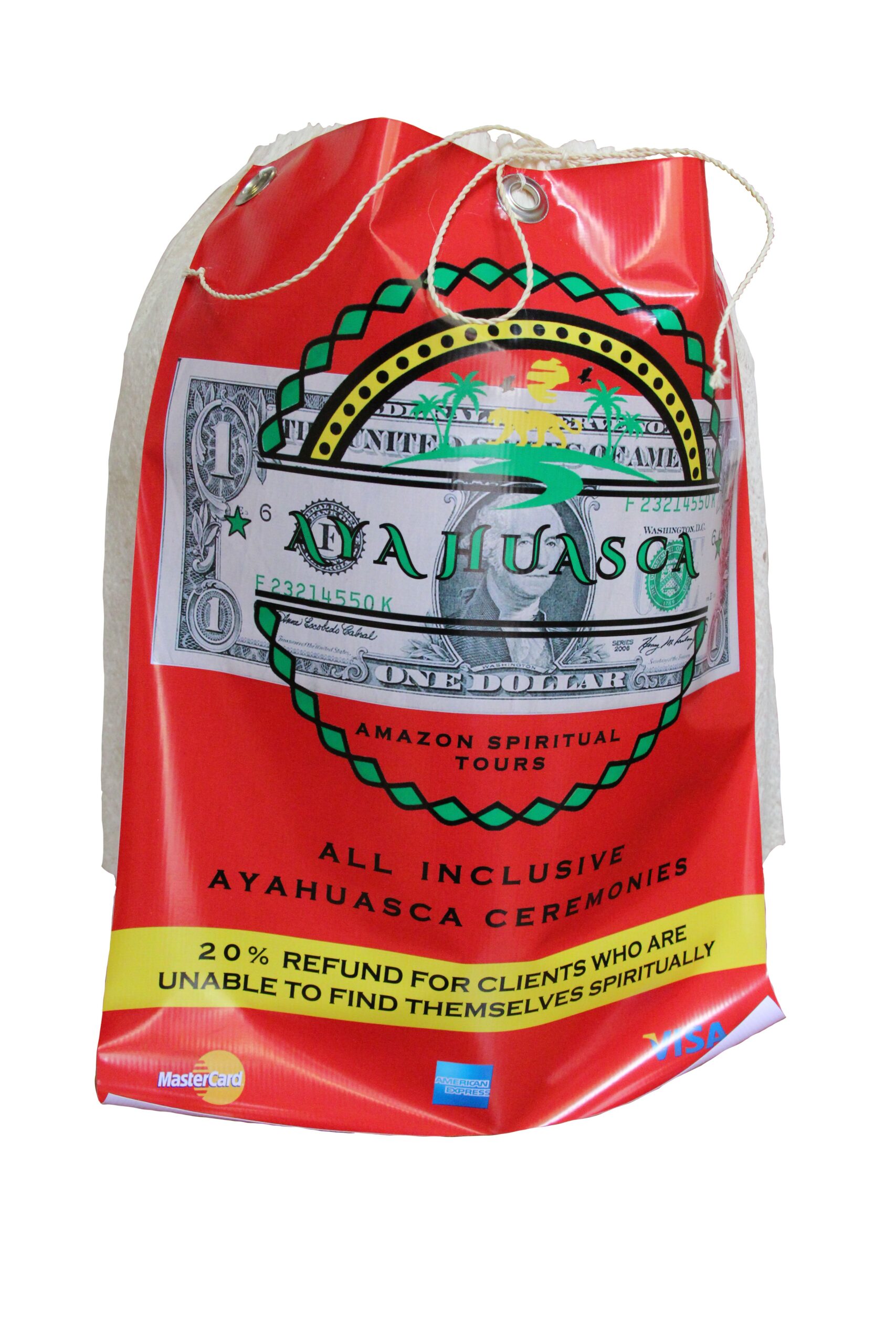
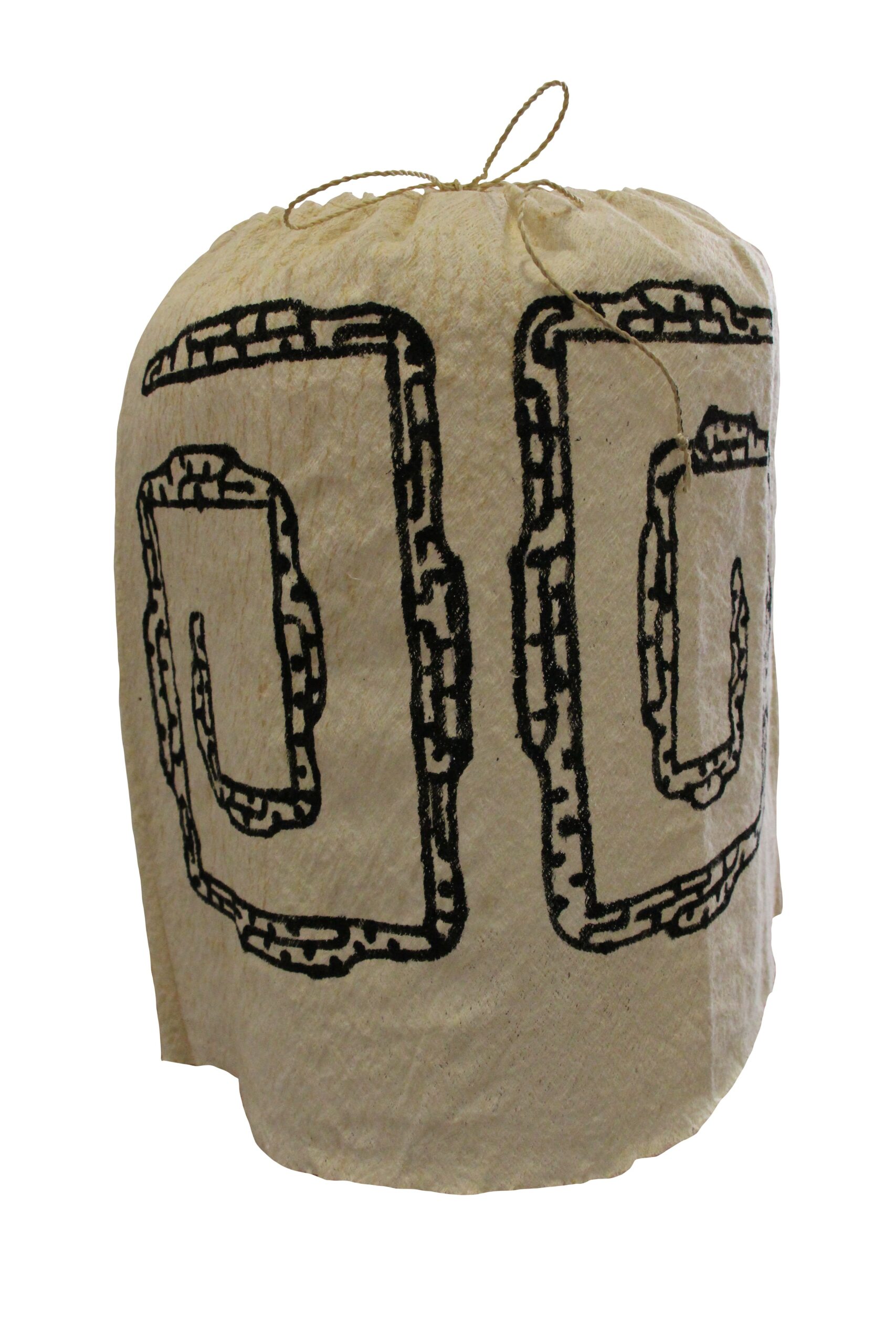
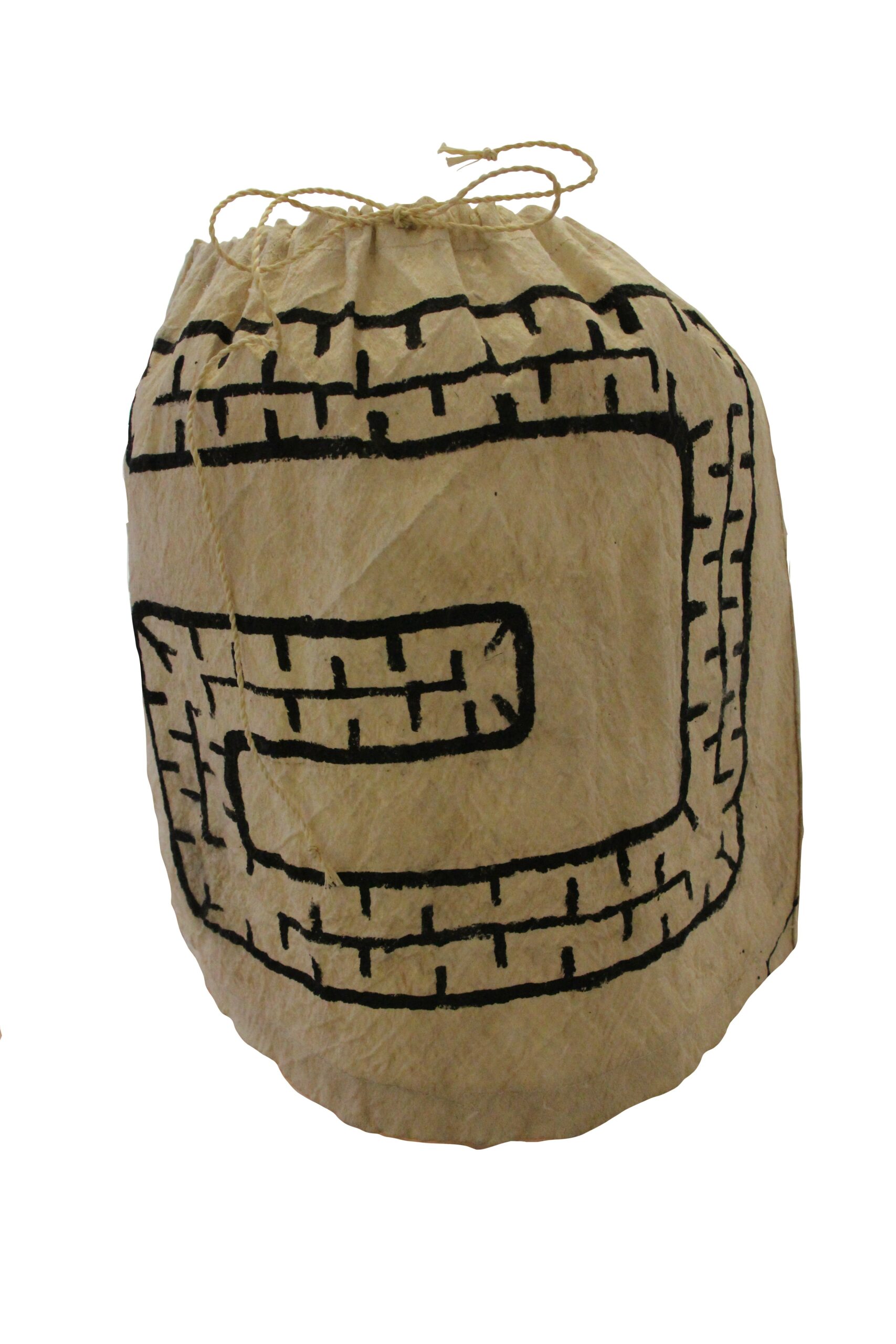
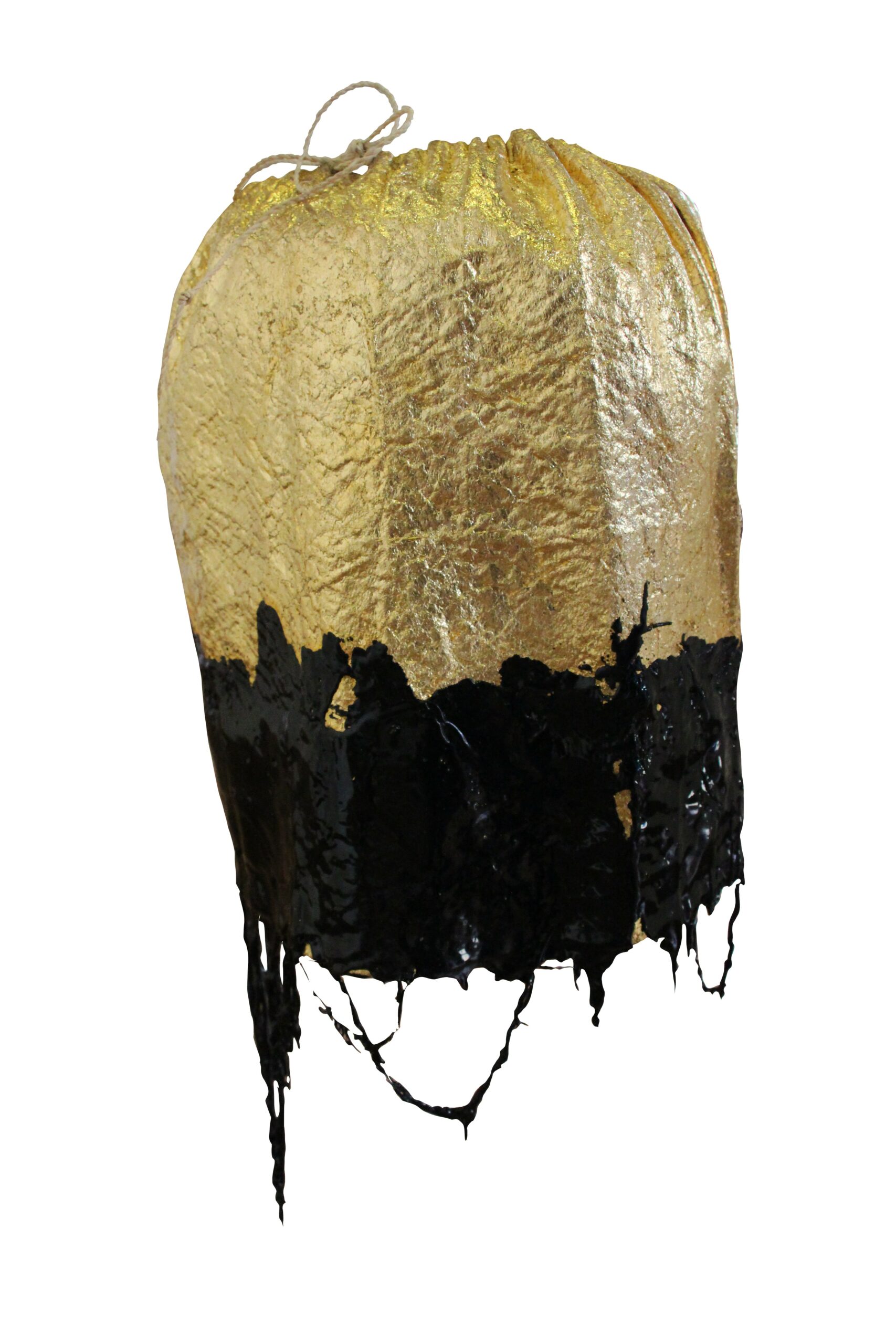
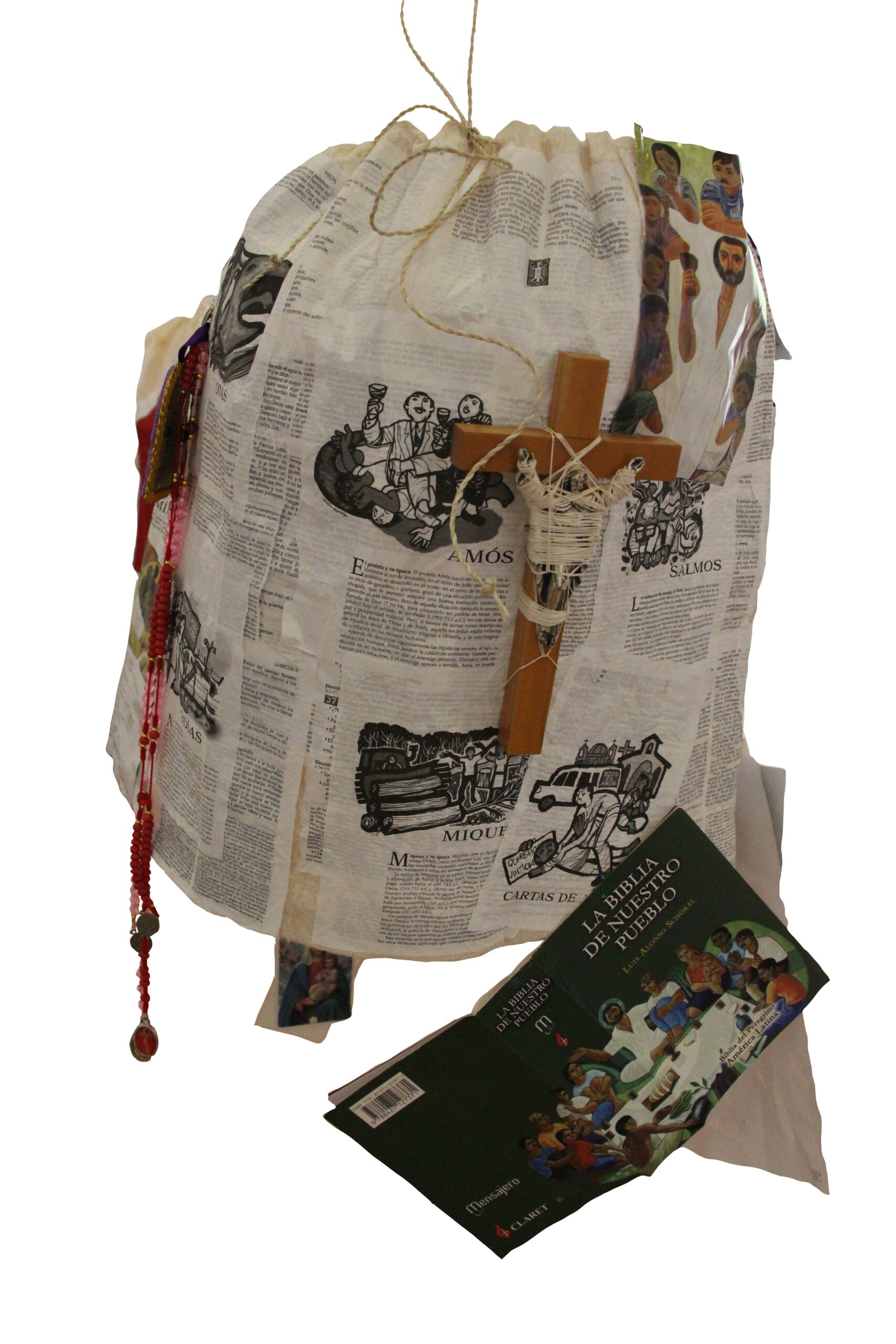
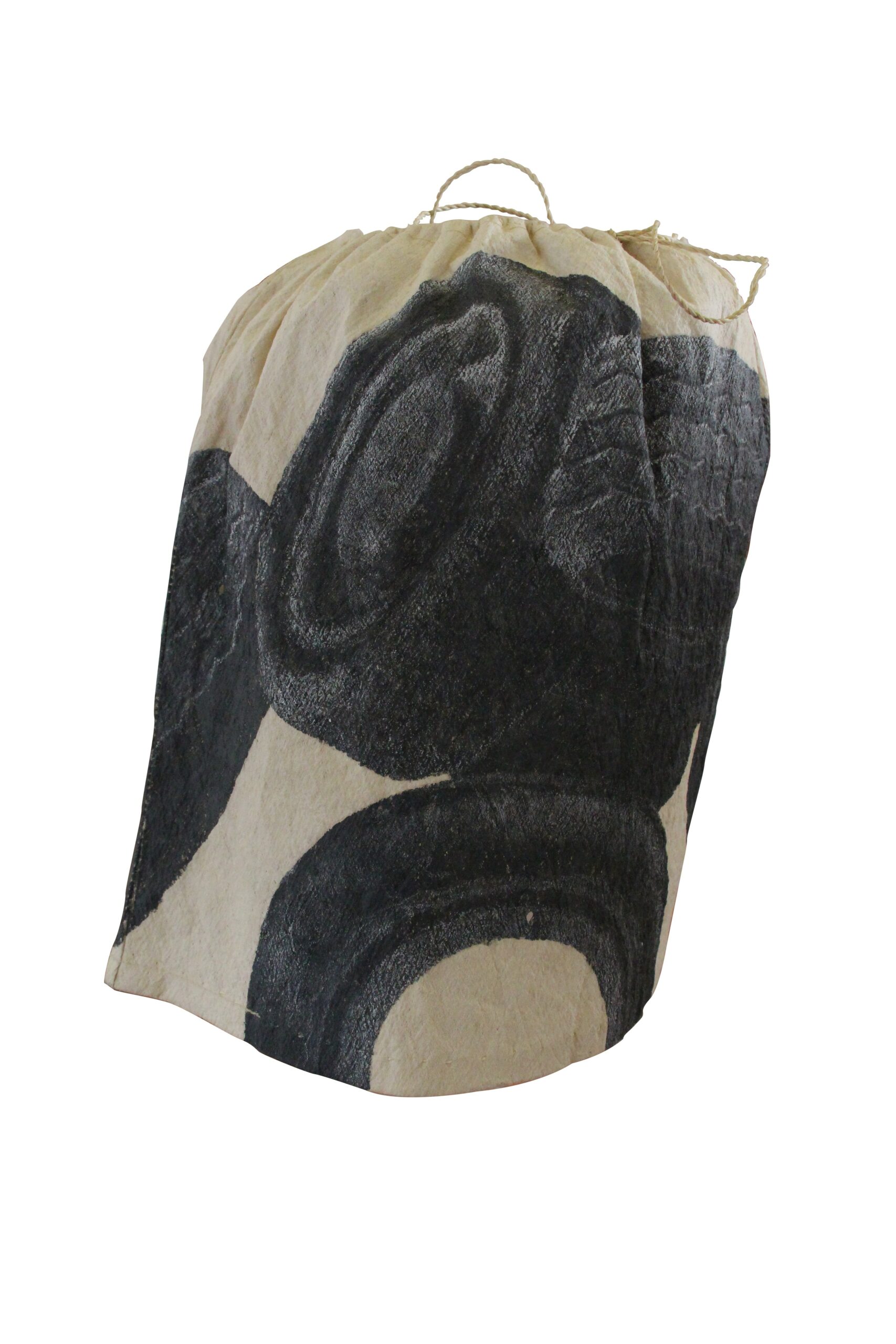
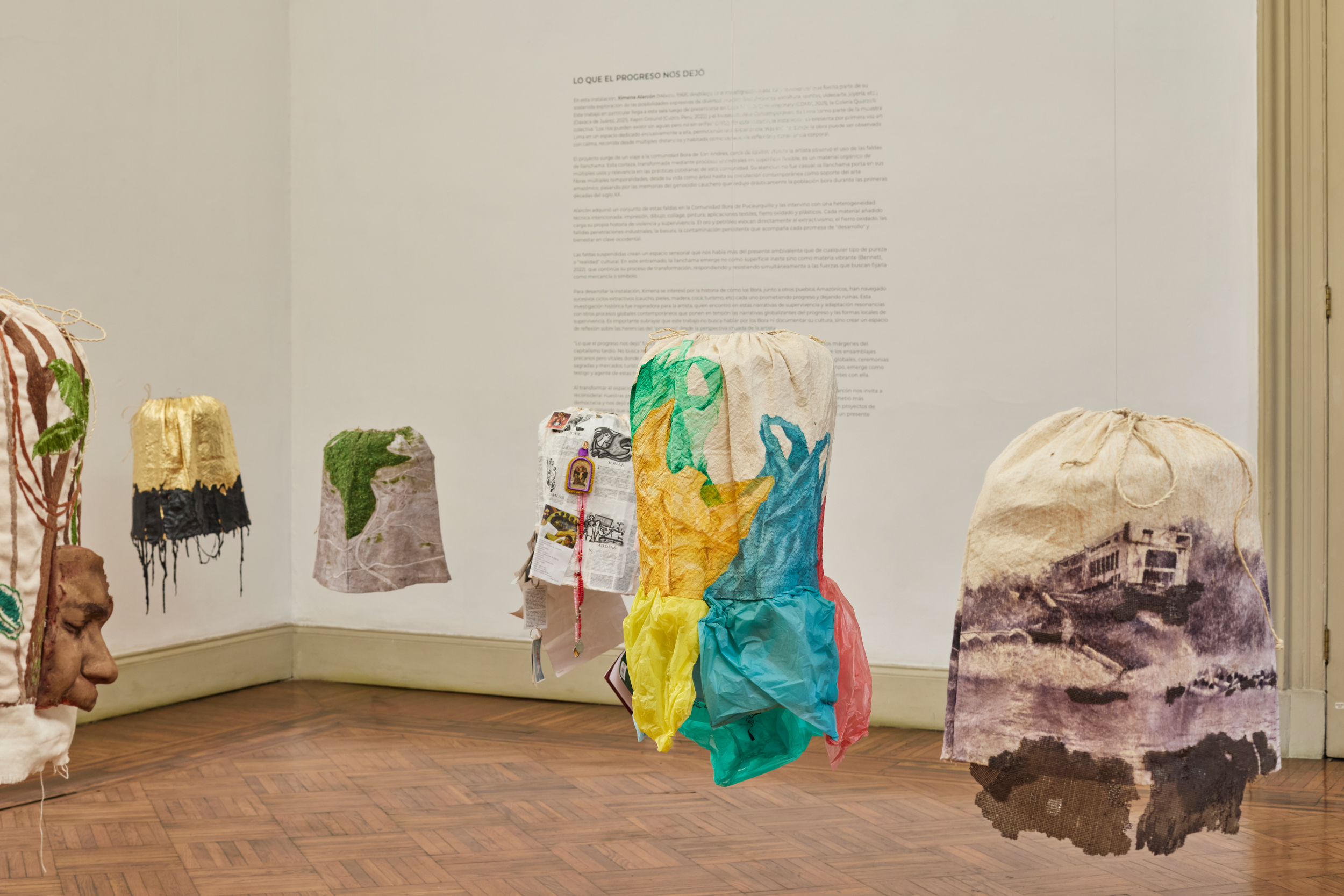
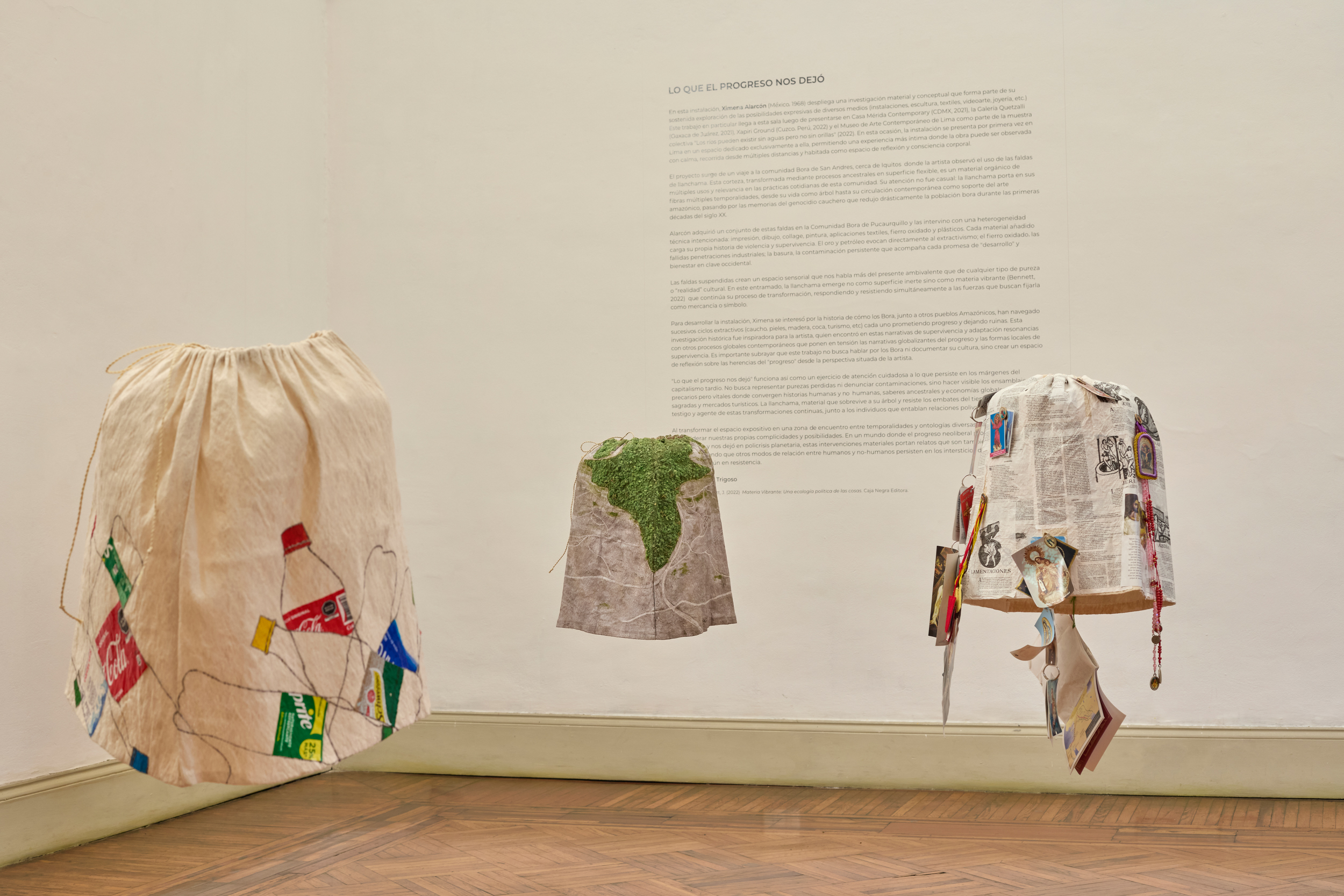
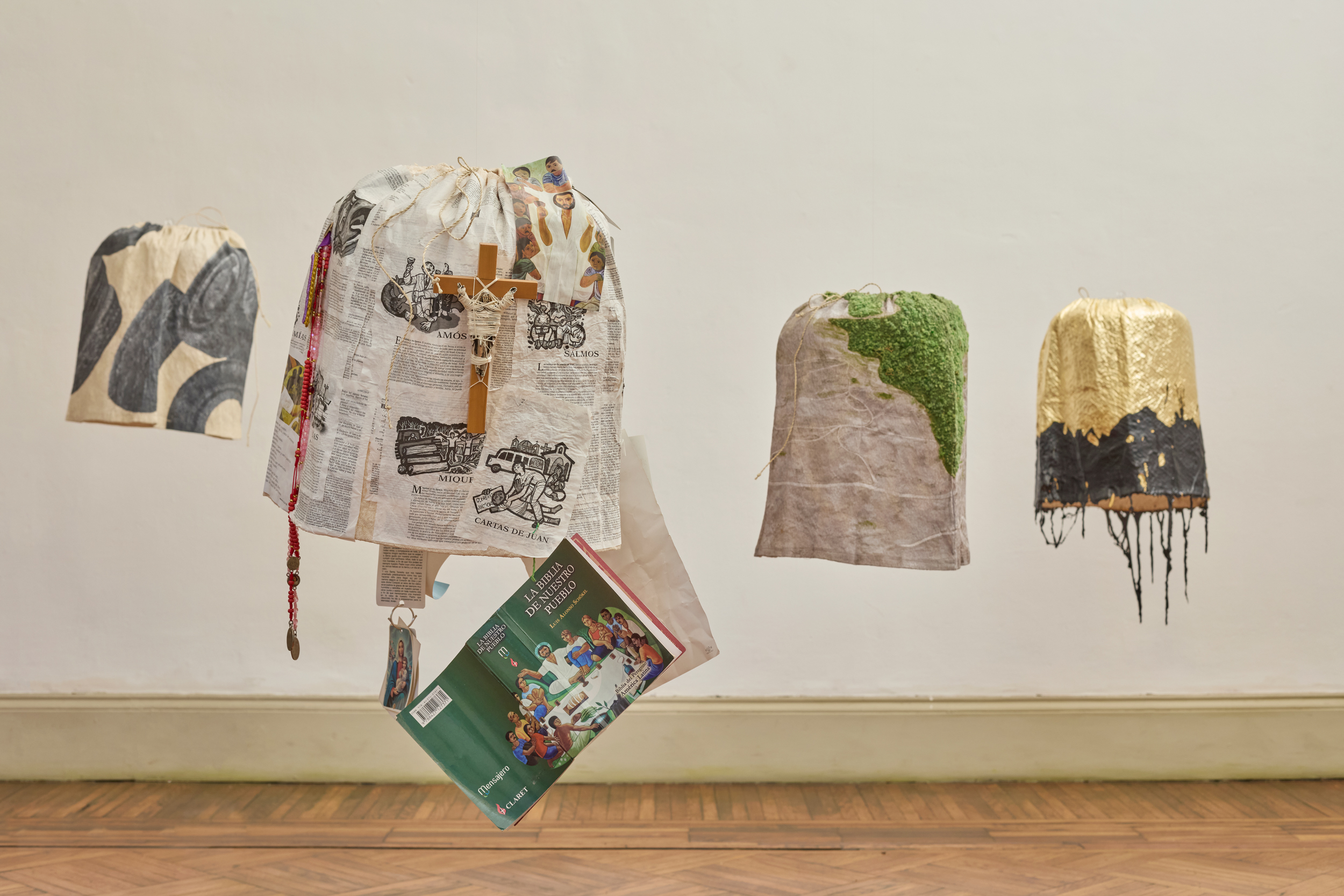
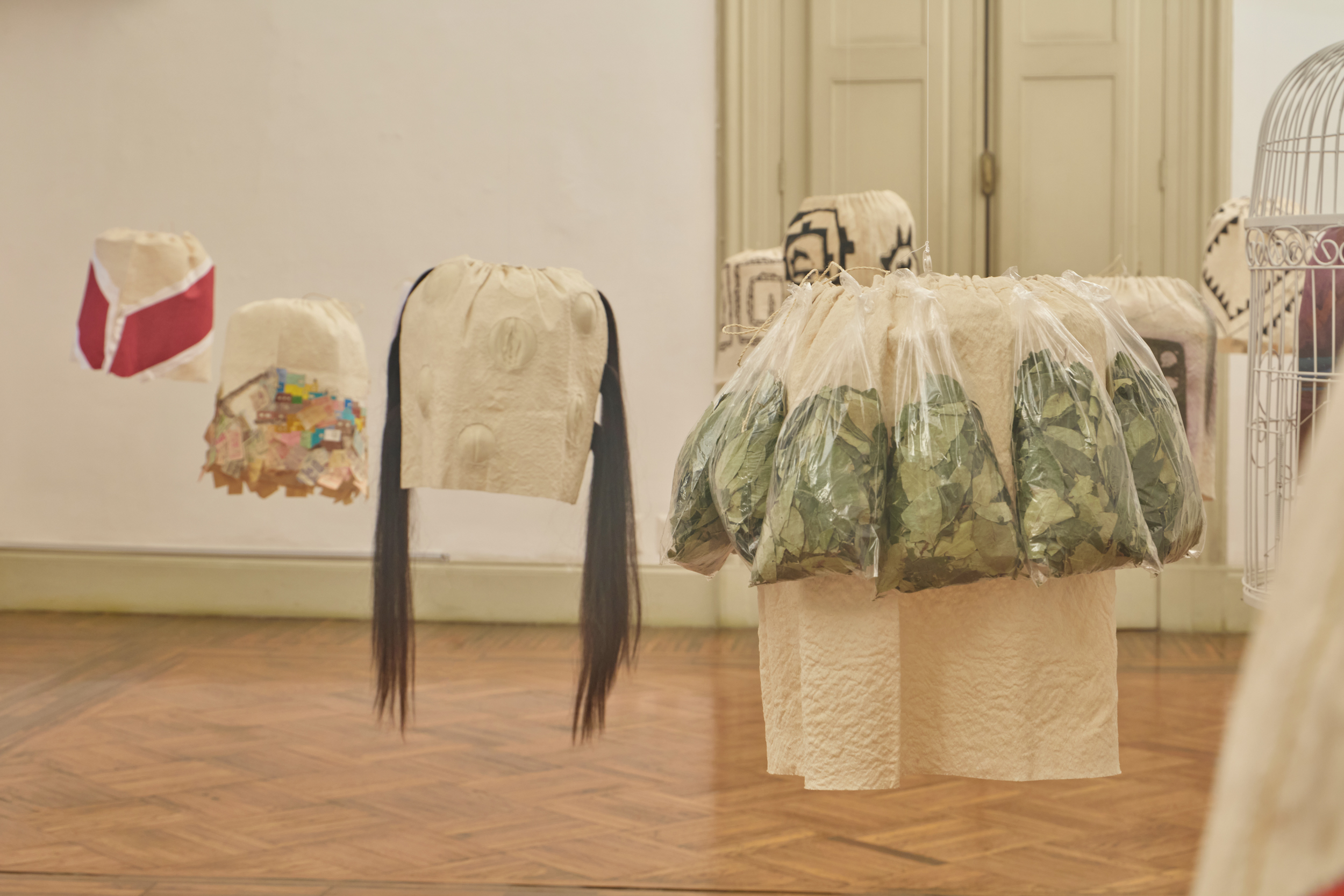
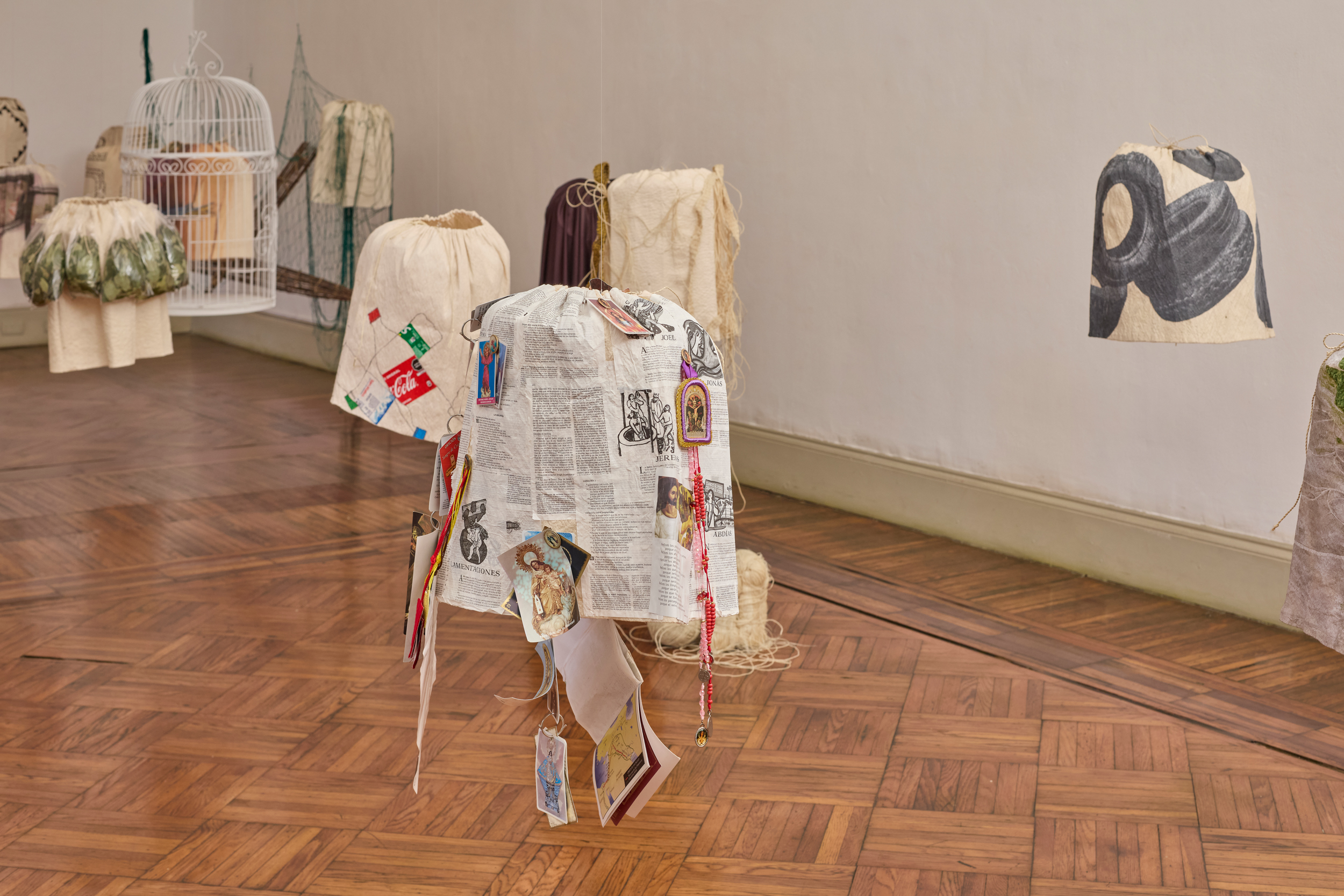
“Lo que el progreso nos dejó” (What progress left us), by Mexican artist Ximena Alarcón, will present an installation made with traditional llanchama skirts or bark cloth, belonging to the native Bora people, who live in the Amazon region of Peru and Colombia. The pieces are created using different techniques such as printing, drawing, collage, painting, fabric applications, rusted iron, rubbish, and rubber.
Carlos Zevallos, curator of the exhibition, comments the work of Alarcón: “Each material added carries its own history of violence and survival. The gold and oil directly evoke extractivism; the rusty iron, the failed industrial penetrations; the rubbish, the persistent contamination that accompanies every promise of “development” and well-being in the Western sense”.
Alarcón – adds Zevallos – became interested in the history of how the Bora, along with other Amazonian peoples, have lived through successive extractive cycles (rubber, furs, wood, coca, tourism, etc.), each one promising progress and often leaving ruins in their wake. The work does not intend to speak for the Bora people or document their culture, but to create a space for reflection on the legacies of “progress” from the perspective of the artist.
Ximena Alarcón (Mexico, 1968) is an artist whose practice has evolved from sculpture to a broader conceptual exploration through photomontage, collage, installation, video, and performance. She has presented solo exhibitions at the Museum of Contemporary Art of Querétaro, the Museum of Art in Ciudad Juárez, and the Sebastián Foundation in her native country. She has participated in group exhibitions at the Museum of Contemporary Art in Lima and Casa Mérida in Mexico, among others. Her work can be found in public and private collections in Mexico, Spain, Sweden, France, the United States, Peru, and Japan.
Share

Cultural Center activities
Free entry
Folow us




SEGIB’s support is appreciated
Copyright © 2020 Centro Cultural Inca Garcilaso. All rights reserved | Legal notice | Privacy policy | Cookies policy